“Which type of entrepreneur are you?”, DISC assessments, “find your skincare routine”: profile discovery quizzes don’t add up a single score. Each answer feeds one of several counters, and whichever counter ends highest decides the result. Yay! Forms has an operator built exactly for that comparison: is the greatest one.
This tutorial builds a three-profile quiz (Builder, Strategist, Connector). If rules and variables are new to you, read How to add logic to your form first.
Step 1: One variable per profile
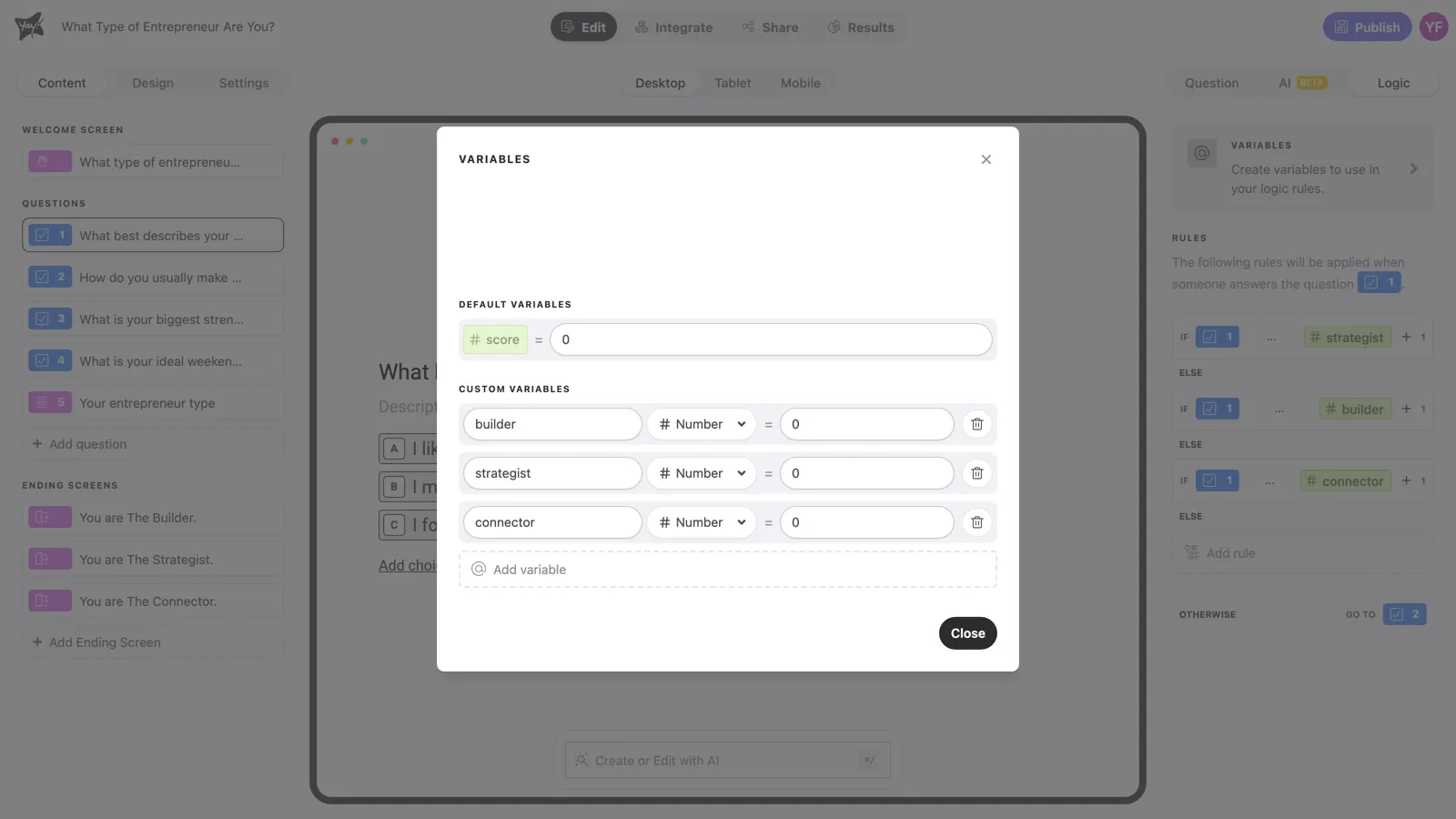
Open any question’s Logic tab, click Variables, and add one Number variable per possible result, all starting at 0. Ours: builder, strategist, and connector.
Step 2: Each answer feeds a profile
On every quiz question, chain one rule per option with Else: IF the answer is the “structure and systems” option, THEN Add 1 TO strategist; else the “move fast” option adds 1 to builder; else the “people and ideas” option adds 1 to connector.
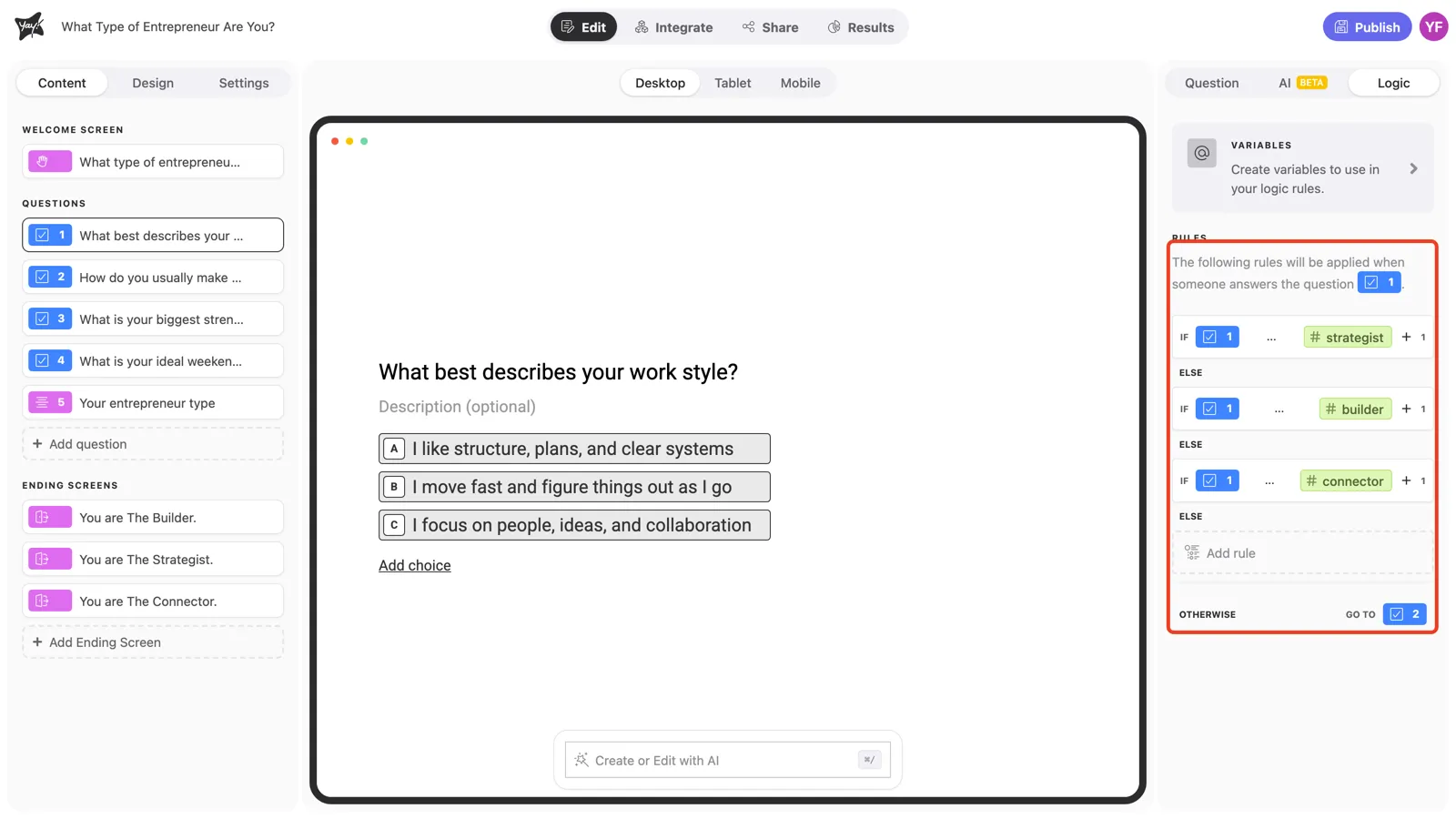
Since each respondent picks exactly one option, exactly one rule matches per question. Repeat the pattern on all quiz questions. Weighted answers work too: an answer can add 2 to one profile, or feed two profiles with two actions in the same rule.
Step 3: The extra final step (don’t skip this)
Here’s the trap everyone hits: rules run when their question is answered, so a routing rule on the last quiz question would read the counters before that question’s own points land. The totals aren’t final until after the last answer.
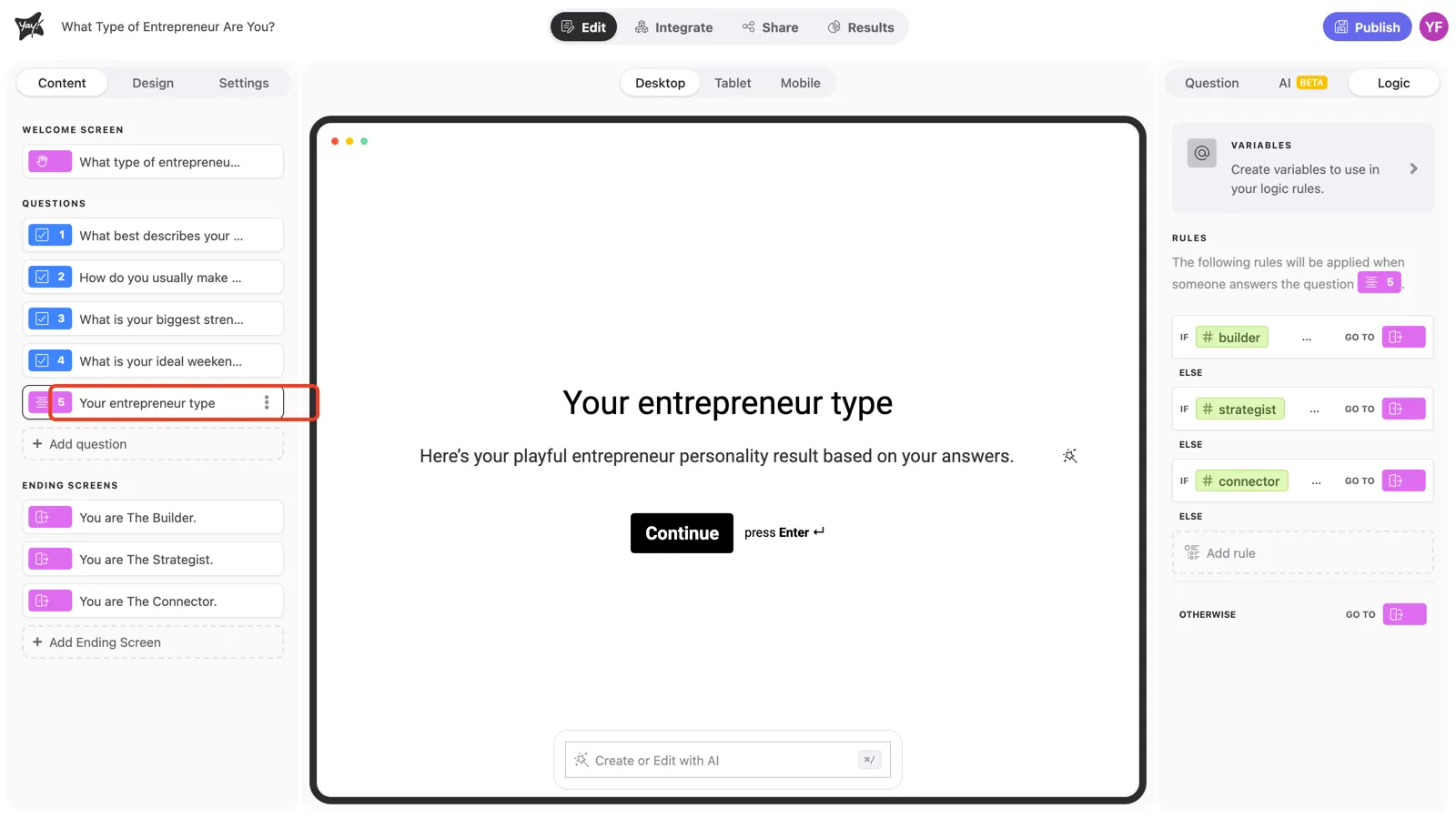
The fix is one extra step after the last question, with no points of its own, to carry the routing rules. A Statement is perfect: it shows a message (“Your result is ready…”), asks nothing, and gives the logic a place to run after all the counting is done.
Step 4: Route with “is the greatest one”
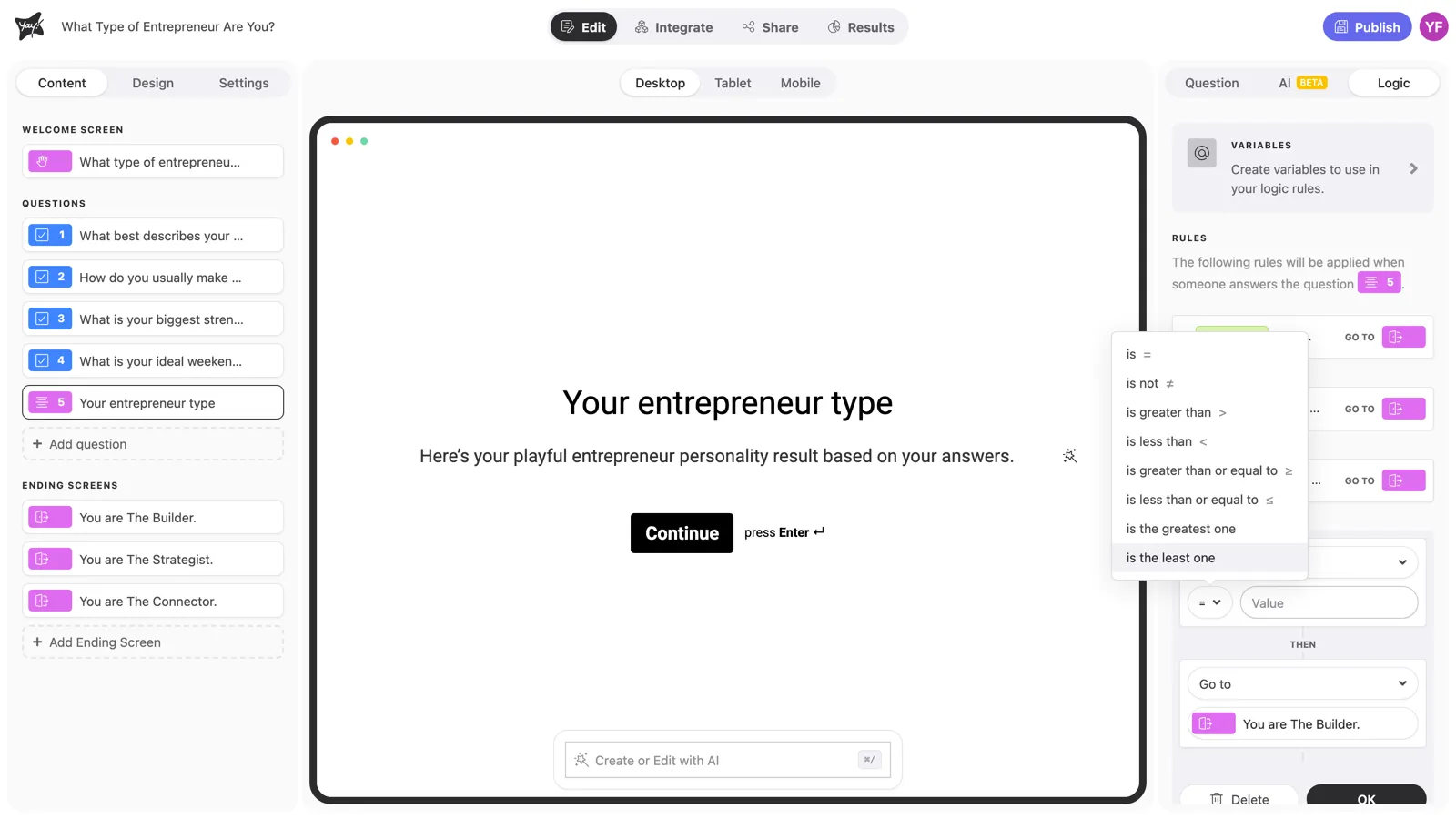
Create one ending screen per profile. Then, on the Statement, chain one rule per profile: IF builder is the greatest one, THEN Go to the Builder ending; else strategist is the greatest one goes to the Strategist ending; and so on.
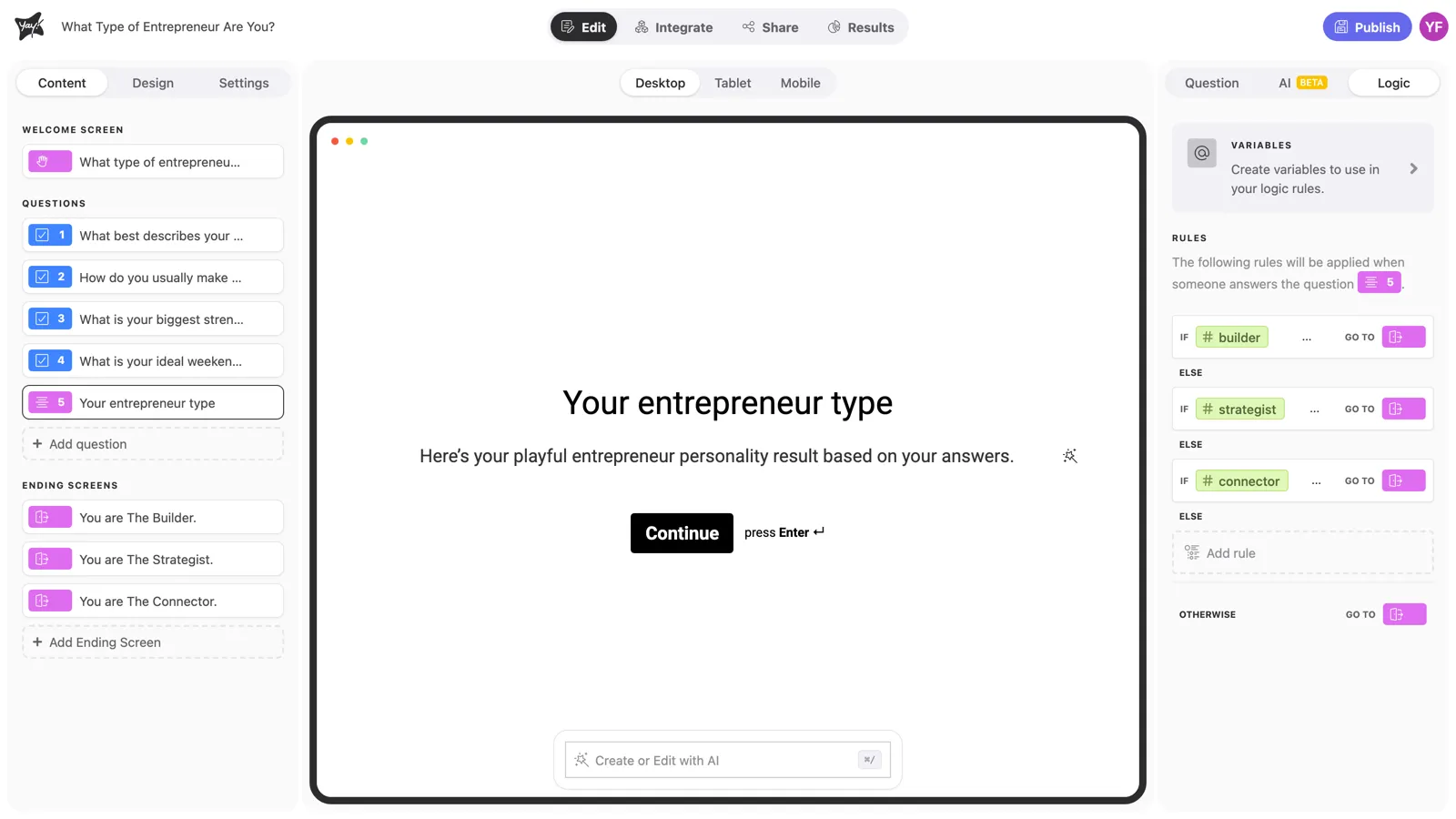
Is the greatest one compares the variable against all your other variables and is true when it holds the highest value. You’ll find it with the other comparison operators whenever the condition tests a variable:
Lighter alternative: one AI-personalized ending
If your results differ in text rather than structure, skip the multiple endings: keep one ending screen and use its AI tab to generate the title and description per respondent. The prompt can reference the profile variables (“Based on @builder, @strategist and @connector, tell the respondent their type…”), which turns the whole routing step into a sentence of plain language.
Conclusion
You’ve built the profile quiz pattern: one variable per profile, chained rules feeding them on every question, a Statement after the last question, and is the greatest one picking the winner.
Related articles: